Keeping a baby safe is one of the biggest responsibilities for every parent. Babies are curious, active, and always ready to explore their surroundings. They may touch electrical sockets, open drawers, pull tablecloths, crawl toward stairs, or put small objects in their mouths. These everyday activities can sometimes lead to accidents.
This is why baby safety products are important for creating a safer home environment. These products are designed to reduce common risks and help parents protect their little ones while they learn and explore.
In this guide, we will explain what baby safety products are, why they are important, which products parents can use at home, and how to choose them. The information is written in simple language so that anyone can understand it easily.
What Are Baby Safety Products?
Baby safety products are specially designed items that help protect babies and young children from common household dangers. These products can be used in different areas of the home, such as the bedroom, kitchen, bathroom, living room, and stairs.
Some examples include:
- Baby safety gates
- Corner and edge guards
- Cabinet and drawer locks
- Electrical socket covers
- Door handle locks
- Baby bed rails
- Baby head protectors
- Baby knee protectors
- Baby monitors
- Anti-slip mats
- Baby proofing kits
The main purpose of these products is simple: make the home safer for babies and give parents extra peace of mind.
Why Are Baby Safety Products Important?
Babies do not understand danger. A sharp table corner may look like something interesting to touch. An electrical socket may attract their attention. A staircase may look like a fun place to crawl.
Parents cannot watch their baby every second of the day. Even when a parent is nearby, accidents can happen very quickly.
Baby safety products can help reduce some of these everyday risks.
For example, a socket cover can prevent a baby from easily putting fingers or objects into an electrical outlet. A corner guard can make a sharp furniture corner safer. A cabinet lock can stop a child from opening a cabinet that contains unsafe items.
However, safety products should not replace adult supervision. Parents should still watch their children and keep dangerous items away from them.
Common Baby Safety Products for Home
There are many types of baby safety products available today. The right products depend on your baby’s age, your home, and the areas where your baby spends most of their time.
1. Baby Safety Gates
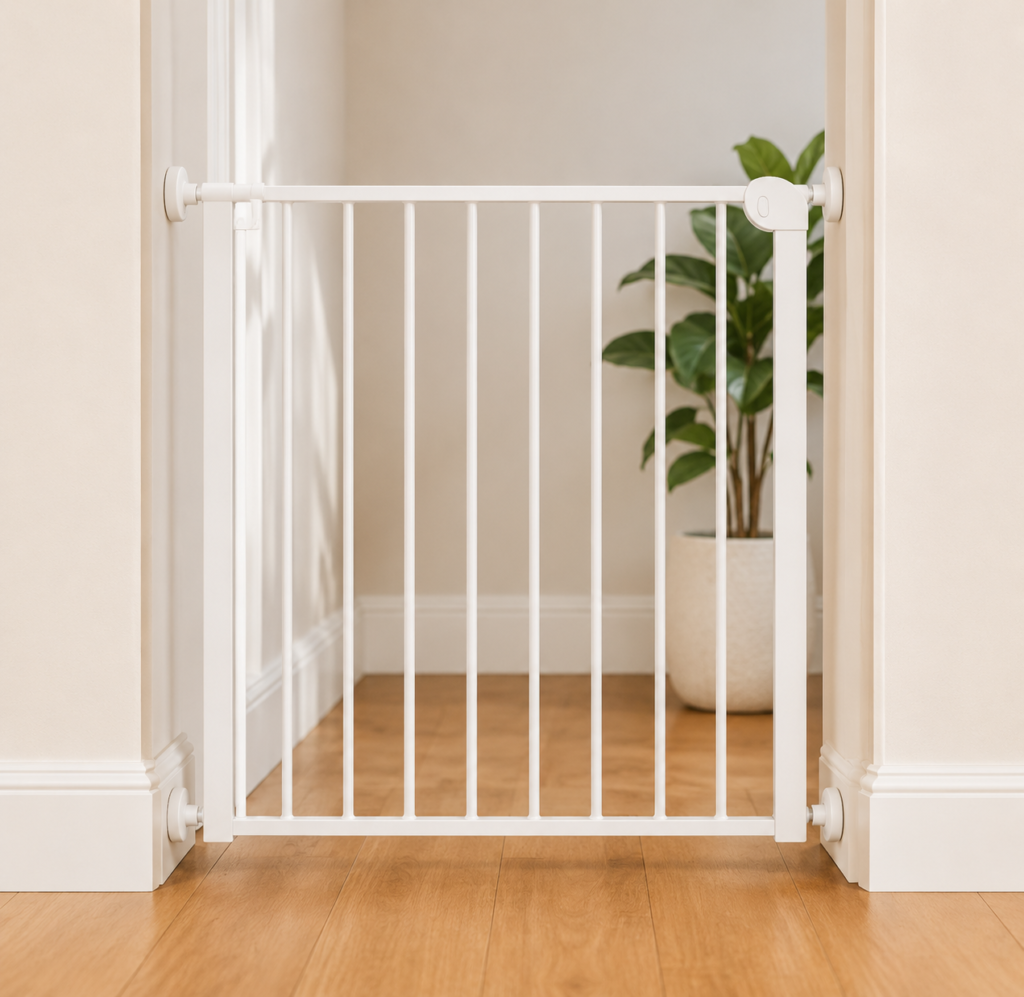
Baby safety gates are useful for areas that parents want to keep restricted. They are commonly used near stairs, doorways, kitchens, and other areas that may not be safe for babies.
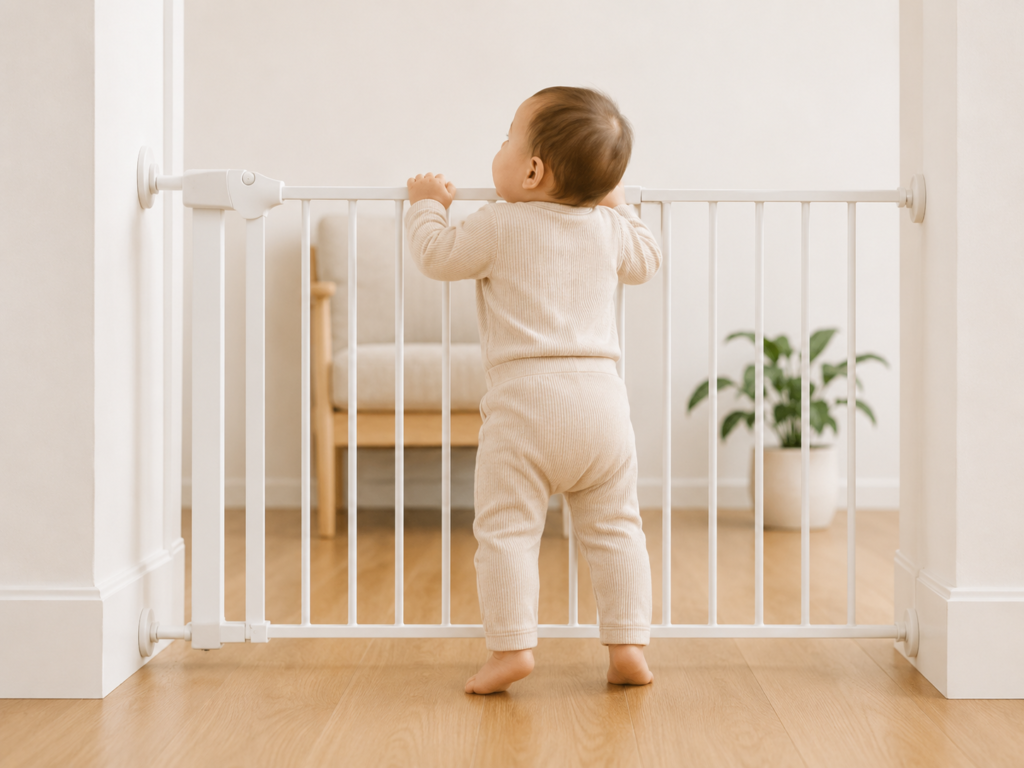
When babies start crawling and walking, they want to explore everything around them. A safety gate can create a barrier between the baby and a risky area.
Parents should choose a strong gate that fits the opening properly. It should also be installed according to the manufacturer’s instructions.
2. Corner and Edge Guards
Furniture can have sharp corners and edges. A baby who is learning to walk may accidentally fall against a table, bed, shelf, or other furniture.
Corner and edge guards are soft protective covers that can be placed on sharp corners.
They are especially useful for:
- Tables
- TV units
- Cabinets
- Shelves
- Desks
- Beds
- Other furniture with sharp edges
These products can help reduce the risk of injuries caused by accidental bumps.
3. Cabinet and Drawer Locks Baby Safety Products
Babies love opening things. A drawer or cabinet can quickly become a place for exploration.
But kitchen and bathroom cabinets may contain items that are not suitable for children, such as cleaning products, medicines, sharp tools, or other household items.
Baby-proof cabinet and drawer locks can help prevent young children from opening these spaces easily.
Parents should still store dangerous products in a safe place that is completely out of a child’s reach.
4. Electrical Socket Covers
Electrical outlets can be dangerous for young children. Babies may try to touch or explore them with their fingers or toys.
Electrical socket covers are designed to help prevent children from accessing unused electrical outlets.
Before using any socket cover, parents should make sure it is suitable for their type of outlet and installed correctly.
5. Door Handle Locks
Doors can create different safety problems for babies. A child may enter a room that is not safe, close themselves inside a room, or access areas where they should not be.
Door handle locks can help limit access to certain rooms.
They can be useful for places such as:
- Bathrooms
- Storage rooms
- Kitchens
- Utility areas
- Other restricted spaces
Parents should always make sure that adults can easily open the door when necessary.
6. Baby Bed Rails
As babies grow into toddlers, they may move around a lot while sleeping. Bed rails are designed to help reduce the chance of a child accidentally rolling from a suitable bed.
Parents should carefully check the product’s age recommendations and installation instructions before using one.
It is also important to understand that not every type of bed rail is suitable for every child or sleeping setup.
7. Baby Head Protectors
When babies start crawling and walking, falls and bumps can happen. Some parents choose soft baby head protectors for extra protection during active play.
These products may provide cushioning around the head, but they should not be considered a replacement for supervision.
Parents should check the fit, material, comfort, and age recommendation before purchasing a head protector.
8. Baby Knee Protectors
Babies often spend a lot of time crawling on the floor. Baby knee protectors can provide a soft layer between the baby’s knees and the floor.
They may be useful on hard floors or during outdoor crawling activities.
A good knee protector should be comfortable, flexible, and suitable for the baby’s size.
9. Anti-Slip Mats
Slippery floors can be risky for babies who are learning to crawl or walk. Anti-slip mats can help create a more stable surface.
They can be useful in areas such as:
- Bathrooms
- Play areas
- Bedrooms
- Near sinks
- Other slippery surfaces
Parents should make sure the mat stays firmly in place and does not create a new tripping hazard.
10. Baby Monitors
A baby monitor allows parents to keep an eye or ear on their baby from another room. Baby Safety Products
Some monitors provide audio, while others offer video and additional features.
A baby monitor can be helpful, but it does not replace direct supervision. Parents should still check their baby regularly and follow safe sleep practices.
Baby Safety Products for Different Rooms
Every room in a home can have different safety risks. Instead of buying every product available, parents should first look around their home and identify possible dangers.
Baby Safety in the Bedroom
The baby’s bedroom should be comfortable and safe. Keep small objects, loose items, and dangerous products away from the baby’s sleeping area.
Useful safety products may include:
- Baby monitors
- Appropriate bed safety products
- Corner guards
- Furniture anchors
- Drawer locks
Furniture should also be stable and secured when necessary.
Baby Safety in the Living Room
The living room usually has many things that babies want to explore. Tables, televisions, electrical outlets, wires, and decorative objects can become potential hazards.
Parents can consider:
- Corner guards
- Socket covers
- Cable management solutions
- Furniture anchors
- Drawer locks
- Safety gates
Small decorative items should be kept away from babies.
Baby Safety in the Kitchen
The kitchen is one of the areas where parents need to be especially careful.
Hot surfaces, sharp objects, cleaning products, glass items, and electrical appliances can create serious risks.
Possible baby-proofing products include:
- Cabinet locks
- Drawer locks
- Safety gates
- Appliance locks
- Stove safety solutions
It is best to keep babies away from cooking areas whenever possible.
Baby Safety in the Bathroom
Bathrooms can contain water, medicines, cleaning products, cosmetics, and slippery surfaces.
Parents can improve safety by using:
- Anti-slip mats
- Cabinet locks
- Door locks
- Toilet safety products
- Corner protection where needed
Never leave a baby or young child alone around water, even for a short time.
Baby Safety Near Stairs
Stairs can be dangerous for crawling babies and young children.
A properly installed baby safety gate can help restrict access to stairs. Parents should select a product designed for the specific location and follow installation instructions carefully.
How to Choose the Right Baby Safety Products
Choosing baby safety products does not have to be difficult. Parents should focus on quality, correct use, and suitability.
Check the Age Recommendation
Different products are designed for different ages and stages. Always read the recommended age range before purchasing a product.
A product suitable for a toddler may not be suitable for a newborn.
Check the Material
Look for products made from suitable, durable, and baby-friendly materials. Avoid products with sharp edges, loose parts, or poor-quality construction.
Check the Size
Size matters, especially for safety gates, bed rails, locks, and protective accessories.
A product that does not fit correctly may not provide the expected protection.
Check the Installation
Some baby safety products need proper installation. Follow the instructions carefully.
For products that require screws, mounting hardware, or other installation methods, make sure they are securely fitted.
Avoid Small Loose Parts
Small parts can become choking hazards for babies and young children. Check safety products regularly for broken or loose components.
If a product becomes damaged, stop using it.
Baby Proofing Your Home Step by Step
Baby proofing means making changes around the home to reduce possible dangers for children.
You do not need to change everything at once. You can start room by room.
Step 1: Get Down to Your Baby’s Level
One simple way to find hazards is to look at your home from a baby’s point of view.
Sit or crawl down and look around.
You may notice:
- Electrical sockets
- Small objects
- Sharp corners
- Loose wires
- Open cabinets
- Accessible drawers
- Low furniture
This can help you find things that adults may normally ignore.
Step 2: Secure Dangerous Areas
Identify places where your baby should not enter.
These could include:
- Stairs
- Kitchen
- Bathroom
- Storage areas
- Utility rooms
Use appropriate safety solutions where needed.
Step 3: Keep Dangerous Items Out of Reach
Cleaning products, medicines, sharp objects, batteries, small toys, and other dangerous items should be stored safely away from children.
Do not depend only on a cabinet lock. Whenever possible, store dangerous items high and securely.
Step 4: Cover Electrical Outlets
Check all accessible electrical outlets in areas where your baby spends time.
Use suitable socket safety products where appropriate.
Also keep electrical wires organized and away from the baby’s reach.
Step 5: Protect Sharp Corners
Check tables, shelves, cabinets, and other furniture for sharp corners.
Use suitable corner and edge protection where needed.
Step 6: Check Your Home Regularly
Baby safety is not a one-time job.
As your baby grows, they become more mobile and learn new skills. A safety solution that worked for a crawling baby may not be enough for a walking toddler.
Review your home regularly and update your safety measures.
Baby Safety Products for Newborns
Newborn babies have different needs from crawling babies.
For newborns, parents should focus on creating a safe sleeping and living environment.
The most important thing is to follow safe sleep recommendations from trusted health authorities. Keep the baby’s sleep area free from unnecessary soft items and follow age-appropriate guidance.
Parents may also use products that help organize baby care, but they should avoid using products simply because they look cute or convenient.
Safety should always come before appearance.
Baby Safety Products for Crawling Babies
When a baby starts crawling, the whole home can suddenly become interesting.
They can reach places they could not reach before. This is the time when parents should carefully review the home.
Useful baby safety products may include:
- Socket covers
- Cabinet locks
- Drawer locks
- Corner guards
- Safety gates
- Door locks
- Anti-slip products
Parents should also remove small objects from the floor because babies often explore objects by putting them in their mouths.
Baby Safety Products for Toddlers
Toddlers are active and independent. They may try to climb, open doors, pull objects, and reach higher places.
At this stage, parents should continue checking:
- Furniture stability
- Stairs
- Doors
- Windows
- Cabinets
- Electrical outlets
- Small objects
- Kitchen access
As toddlers become more capable, parents should teach them simple safety rules along with using safety products.
Common Mistakes Parents Should Avoid
Baby safety products can be useful, but incorrect use can reduce their effectiveness.
One common mistake is buying a product without checking whether it fits the home.
Another mistake is forgetting to check products after installation. A lock or gate can become loose over time.
Parents should also avoid assuming that a safety product makes an area completely safe.
For example, a safety gate does not mean a child can safely play near stairs without supervision.
Another important mistake is leaving medicines, cleaning products, batteries, or sharp objects within reach.
The best approach is to combine safe products, safe habits, and adult supervision.
How Often Should Baby Safety Products Be Checked?
Parents should regularly inspect safety products.
Look for:
- Loose screws
- Broken parts
- Cracks
- Weak adhesive
- Damaged materials
- Loose locks
- Gaps
- Changes in fit
If something is damaged, replace it instead of continuing to use it.
The home should also be checked whenever the baby reaches a new stage, such as crawling, standing, walking, or climbing.
Why Quality Matters in Baby Safety Products
When buying products for babies, quality should be more important than price alone.
A cheap product may not always provide the protection you expect. At the same time, expensive does not automatically mean better.
Parents should look for products with clear product information, suitable age recommendations, proper instructions, and reliable construction.
Read product details carefully before purchasing.
Baby Safety Products: What Parents Should Remember
Baby safety is about creating a home where children can explore while reducing unnecessary risks.
Parents do not need to make their home perfect. They need to identify the most important risks and take practical steps to manage them.
A simple safety gate can help block stairs. A corner guard can help protect against sharp furniture edges. A cabinet lock can help prevent access to unsafe items. A socket cover can help protect accessible electrical outlets.
These small changes can make a meaningful difference.