Every parent wants their baby to grow up in a safe, happy, and comfortable home. But when a baby starts crawling, standing, walking, and exploring, even simple things inside the house can become a safety risk.
A table corner, electrical socket, open drawer, staircase, loose wire, or small object may look harmless to an adult. For a curious baby, however, these things can be very interesting.
This is why Baby Proofing Tips for a Safe Home are important for every parent.
Baby proofing means making changes in your home to reduce common risks for babies and toddlers. It does not mean making your home completely risk-free. Instead, it means finding possible dangers and taking simple steps to make the environment safer.
In this guide, we will explain easy and practical Baby Proofing Tips for a Safe Home. You will learn how to make different rooms safer, which baby safety products can help, what common mistakes to avoid, and how to update your home as your baby grows.
The guide uses simple language so that new parents can understand it easily.
What Is Baby Proofing?
Baby proofing is the process of making a home safer for babies and young children.
Babies learn about the world by touching, crawling, pulling, grabbing, and sometimes putting things in their mouths. They do not know which objects are dangerous.
For example, a baby may see an electrical socket and want to touch it. They may see a drawer and want to open it. They may see a staircase and start crawling toward it.
Baby proofing helps parents prepare the home before these situations become a problem.
Some common baby proofing steps include:
- Covering accessible electrical outlets
- Protecting sharp furniture corners
- Securing heavy furniture
- Locking unsafe cabinets and drawers
- Keeping small objects away
- Blocking access to stairs
- Keeping wires away from children
- Keeping medicines and cleaning products safely stored
- Making bathrooms safer
- Keeping babies away from cooking areas
These simple steps can help reduce many everyday household risks.
Why Is Baby Proofing Important?
A baby can move very quickly from one place to another. One minute they may be playing on the floor, and the next minute they may crawl toward a table, cabinet, or staircase.
Parents cannot watch their baby every second of the day. This is why preparing the home is so important.
Baby proofing can help create a safer environment for babies while they explore and learn.
It can also make parents feel more comfortable because they know they have taken practical steps to reduce common dangers.
However, it is important to remember that baby proofing products and safety measures do not guarantee complete protection.
Adult supervision is always important.
Baby proofing should be used together with safe habits, proper supervision, and regular checks around the home.
When Should You Start Baby Proofing Your Home?
Many parents start baby proofing only after their baby begins crawling.
But it is better to start earlier.
Babies develop new skills quickly. A baby who cannot move much today may start rolling, crawling, standing, or walking soon.
Preparing your home before these changes gives you more time to find possible hazards.
You do not need to baby proof the whole house in one day. Start with the areas where your baby spends most of their time.
Then slowly move from one room to another.
Now let’s look at some simple Baby Proofing Tips for a Safe Home that parents can follow.
Baby Proofing Tips for a Safe Home
1. Look at Your Home from Your Baby’s Point of View
One of the easiest ways to find safety problems is to get down on the floor.
Try looking around your home from the same height as your baby.
You may notice things that adults normally do not see.
For example, you may find:
- Electrical sockets
- Loose wires
- Small objects
- Sharp furniture corners
- Low shelves
- Open drawers
- Small decorations
- Cables
- Coins
- Batteries
This simple method can help you discover hidden dangers.
Walk through each room slowly and ask yourself:
“Can my baby reach this?”
If the answer is yes and the object could be dangerous, move it or make the area safer.
2. Protect Electrical Sockets
Electrical outlets can be attractive to curious babies.
A baby may try to touch an outlet or put a small object into it.
Parents should take suitable steps to protect accessible electrical outlets.
Socket covers may be useful for suitable outlets, but parents should make sure the product is compatible with their outlet type and installed correctly.
Also keep electrical wires and chargers away from areas where your baby plays.
Do not leave loose cables lying across the floor.
3. Protect Sharp Furniture Corners
Furniture is another area that parents should check carefully.
Tables, desks, shelves, cabinets, and other furniture may have sharp corners.
When a baby is learning to stand or walk, they can lose balance and fall against furniture.
Soft corner and edge protectors can be used on suitable furniture.
Check the protectors regularly to make sure they remain securely attached and are not damaged.
4. Secure Heavy Furniture
Babies and toddlers are naturally curious. As they become stronger, they may try to climb furniture.
An unstable bookshelf, cabinet, dresser, Baby Proofing Tips for a Safe Home or television unit can become dangerous if a child pulls or climbs on it.
Parents should secure suitable heavy furniture according to the manufacturer’s instructions.
Furniture anchoring products may provide additional protection against tip-over risks.
Also avoid placing toys or attractive objects on furniture where they encourage a child to climb.
5. Lock Cabinets and Drawers
A cabinet or drawer may look like a fun place for a baby to explore.
But it may contain unsafe items.
For example, kitchen and bathroom cabinets can contain:
- Cleaning products
- Medicines
- Sharp tools
- Plastic bags
- Small objects
- Cosmetics
- Household chemicals
Use suitable child safety locks where needed.
However, locks should not be the only safety step. Dangerous items should also be stored safely and securely away from children.
6. Keep Small Objects Away from Babies
Babies often explore objects with their mouths.
Small objects can therefore be dangerous.
Parents should regularly Baby Proofing Tips for a Safe Home check floors, sofas, tables, and other low surfaces.
Look for things such as:
- Coins
- Batteries
- Buttons
- Small toy parts
- Pen caps
- Small pieces of plastic
- Jewelry
- Other tiny objects
If you find a small object that could fit into your baby’s mouth, remove it immediately.
7. Keep Medicines Out of Reach
Medicines should never be left where children can reach them.
Do not leave medicine bottles on tables, bedside cabinets, kitchen counters, or other low surfaces.
Store medicines securely and follow the storage instructions on the packaging.
Remember that child-resistant packaging is not the same as childproof. Children should not have access to medicines.
8. Store Cleaning Products Safely
Cleaning products can be harmful if a child gets access to them.
Keep detergents, bathroom cleaners,Baby Proofing Tips for a Safe Home disinfectants, and other household chemicals stored securely.
Do not leave cleaning products on the floor.
Do not transfer chemicals into drink bottles or food containers because this can cause confusion.
A locked cabinet or another secure storage area can help keep these products away from children.
Baby Proofing the Living Room
The living room is usually one of the most active areas in a home.
Babies may crawl, play, stand, and walk around this room.
That means parents should carefully check the entire area.
Look for:
- Sharp furniture corners
- Electrical outlets
- Loose cables
- Small decorations
- Unstable furniture
- Remote controls
- Small objects
- Low cabinets
- Tablecloths
Corner guards can help protect sharp furniture edges.
Socket safety products can help protect accessible outlets.
Furniture should be stable and secured where necessary.
Keep small decorations and objects away from your baby’s reach.
Be Careful with Tablecloths
A hanging tablecloth may look harmless, but a baby can grab it and pull.
If there are heavy or hot objects on the table, pulling the cloth can create a serious risk.
Avoid leaving dangerous items on tables that your child can reach.
Baby Proofing the Kitchen
The kitchen is one of the most important areas to baby proof.
There are many possible hazards in a kitchen, including:
- Hot surfaces
- Sharp knives
- Glass items
- Cleaning products
- Hot liquids
- Electrical appliances
- Heavy objects
- Open cabinets
- Small food items
The easiest safety step is to keep babies away from cooking areas.
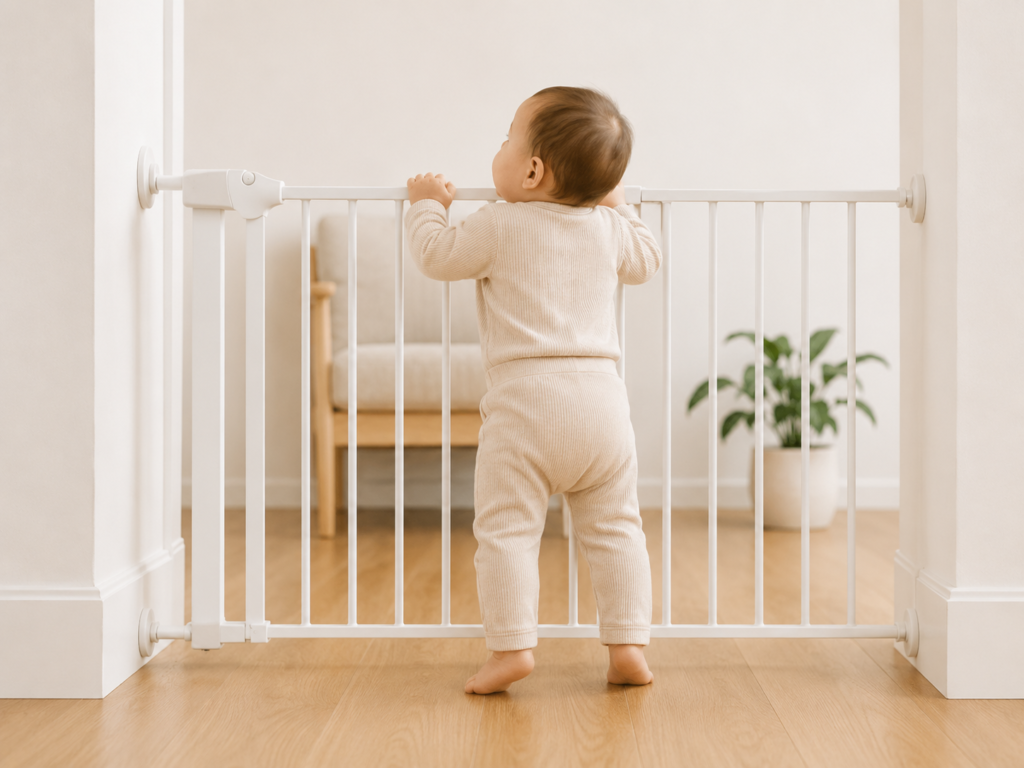
A suitable safety gate may help restrict access when appropriate.
Store sharp objects securely.
Keep hot food and drinks away from the edge of counters and tables.
Never leave a baby alone near an active cooking area.
Keep Kitchen Appliances Safe
Kitchen appliances can have wires, hot surfaces, or moving parts.
Keep appliances and their cords away from the baby’s reach when they are not being used.
Do not leave appliances where a child can pull them down.
Make sure appliance cords do not hang over the edge of a counter.
Baby Proofing the Bathroom
The bathroom can be dangerous for young children because of water, slippery surfaces, medicines, and electrical items.
One of the most important Baby Proofing Tips for a Safe Home is to never leave a baby alone near water.
This includes:
- Bathtubs
- Buckets
- Sinks
- Toilets
- Water containers
Even a small amount of water can create a serious risk.
Keep the bathroom floor as dry as possible.
Store medicines and cleaning products securely.
Keep electrical appliances away from water.
Suitable anti-slip products can also be used where appropriate.
Baby Proofing Stairs
Stairs can be a major concern once your baby starts crawling.
Babies do not understand that stairs can cause falls.
A suitable safety gate can help restrict access to stairs.
Make sure the gate is appropriate for the location and installed according to its instructions.
Check it regularly to make sure it remains secure.
Also avoid placing chairs, boxes, or other furniture near the gate because a child may use them to climb.
Baby Proofing Doors
Babies may become interested in opening doors.
They may enter rooms where they should not be, such as kitchens, bathrooms, storage areas, or utility rooms.
Suitable door safety products can help restrict access to certain areas.
Parents should make sure adults can still open the door quickly when necessary.
Also be careful about fingers getting caught in closing doors.
Baby Proofing Windows
Windows require special attention when babies and toddlers become mobile.
Do not place furniture such as chairs, beds, or tables close enough to a window that a child can use them to climb.
Use appropriate window safety measures where needed.
Keep window areas clear of objects that encourage climbing.
Baby Proofing the Bedroom
A baby’s bedroom should be clean, organized, and prepared according to safe sleep guidance.
Keep unnecessary items away from the baby’s sleeping area.
Parents should also check:
- Electrical outlets
- Wires
- Furniture
- Drawers
- Windows
- Shelves
- Small objects
Furniture should be stable and secured when necessary.
Follow current safe sleep recommendations from trusted health organizations when preparing your baby’s sleep space.
Baby Proofing for Crawling Babies
When your baby starts crawling, they can suddenly reach many new areas.
This is an important time to review your entire home.
Check the floor carefully.
Remove:
- Small toys
- Coins
- Batteries
- Wires
- Plastic pieces
- Sharp objects
- Small household items
Check under furniture too.
Babies can crawl into spaces that adults may not normally notice.
Baby Proofing for Walking Babies
When babies begin walking, they can reach higher surfaces.
They can also pull themselves up using furniture.
At this stage, parents should check:
- Tables
- Chairs
- Cabinets
- Shelves
- Doors
- Stairs
- Windows
- Cords
- Furniture
A baby who is learning to walk may fall frequently.
Keep walkways clear and remove unnecessary objects from the floor.
Useful Baby Safety Products for Home
Baby proofing can involve simple household changes as well as specially designed safety products.
Some commonly used products include:
Baby Safety Gates
These can help restrict access to stairs, kitchens, and other areas.
Corner and Edge Protectors
These are designed to cover suitable sharp furniture corners and edges.
Cabinet Locks
These can help prevent children from opening certain cabinets.
Drawer Locks
These can help keep unsafe items inside drawers away from children.
Socket Covers
These can help protect accessible electrical outlets when properly selected and used.
Door Safety Locks
These can help restrict access to certain rooms.
Anti-Slip Mats
These can provide additional grip on suitable surfaces.
Furniture Anchors
These can help secure suitable furniture and reduce tip-over risks.
Always read the instructions and age recommendations before using a baby safety product.
How to Choose the Right Baby Safety Products
Choosing a safety product is not only about buying the cheapest option.
Parents should check several things before purchasing.
Check the Product Size
A safety gate, lock, or protector must fit the area correctly.
Always measure the space when required.
Check the Age Recommendation
Some products are designed for particular ages or developmental stages.
Read the product information carefully.
Check the Material
Look for suitable, durable materials.
Avoid products that have sharp edges, loose pieces, or signs of poor construction.
Check the Installation
A safety product that is installed incorrectly may not work as intended.
Follow the manufacturer’s installation instructions carefully.
Check the Product Regularly
Do not install a product and forget about it.
Check it regularly for:
- Cracks
- Loose parts
- Broken pieces
- Weak adhesive
- Loose screws
- Damage
- Changes in fit
Replace damaged products when necessary.
Baby Proofing Tips for a Safe Home: Common Mistakes
Even when parents try their best, some common mistakes can happen.
Mistake 1: Starting Too Late
Waiting until the baby is already walking can leave little time for preparation.
Start looking for risks early.
Mistake 2: Depending Only on Safety Products
Safety products are helpful, but they cannot replace supervision.
Parents should continue watching their children.
Mistake 3: Forgetting About Small Objects
A small object can become a serious hazard.
Regularly check floors and low surfaces.
Mistake 4: Ignoring Furniture Baby Proofing Tips for a Safe Home
Parents sometimes focus on small items but forget about large furniture.
Heavy furniture should be checked for stability and secured where appropriate.
Mistake 5: Not Checking Products
Safety products can become loose or damaged over time.
Inspect them regularly.
Baby Proofing Is an Ongoing Process
Baby Proofing Tips for a Safe Home
“What can my child reach now?”
“Can my child climb this?”
“Can my child open this?”
“Is there anything new that could be dangerous?”
These questions can help you keep your home updated as your child grows.
Create a Safe Play Area
Creating a dedicated play area can make supervision easier.
Choose a space that is:
- Clean
- Organized
- Free from sharp objects
- Free from small dangerous items
- Away from unsafe wires
- Away from stairs
- Away from cooking areas
Provide age-appropriate toys and check them regularly.
Remove broken toys or toys with loose parts.
A safe play area gives your baby a comfortable place to crawl, play, and explore.
Baby Proofing Checklist for Parents Baby Proofing Tips for a Safe Home
Here is a simple checklist to help parents review their home:
- Check electrical outlets.
- Baby Proofing Tips for a Safe Home
- Secure loose wires.
- Protect sharp furniture corners.
- Secure heavy furniture.
- Lock unsafe cabinets.
- Lock unsafe drawers.
- Keep medicines away.
- Store cleaning products safely.
- Remove small objects.
- Check stairs.
- Check windows.
- Make bathrooms safer.
- Keep babies away from cooking areas.
- Check doors.
- Keep hot drinks away from children.
- Check toys for broken parts.
- Check baby safety products regularly.